Forward

Showing posts with label New Production. Show all posts

Monday, January 25, 2016

Get to Know Massenet’s Werther

Background information on the opera by John Conklin, BLO Artistic Advisor


Poster for the first French production of Werther.
By Grasset.
PREMIERE
 Somewhat oddly for this very French opera, the premiere (in German) was at the Vienna Hofoper in 1892. The score had been finished in 1887 but was turned down by Léon Carvalho, director the Opéra-Comique, as “too gloomy” for his audience. Massenet put it aside and continued work on Esclarmonde. After the great success of Manon in Vienna, the opera management there asked for a new Massenet work, and so Werther’s premiere was set in Vienna. The first French production, finally given at the Opéra-Comique in Paris a year later with limited success (still “too gloomy”?), was withdrawn from the repertory, although the following year saw performances in New York (Metropolitan Opera), Chicago, New Orleans, Milan, throughout the French provinces, and a single performance at Covent Garden. In 1903, Albert Carré revived the piece at the Opéra-Comique with great success—it has been performed in Paris alone over 1,300 times and, after Manon, is Massenet’s most popular work worldwide.

LIBRETTO
Written by Édouard Blau, Paul Millet, and Georges Hartmann (Massenet’s publisher), based on Goethe’s 1774 novel, The Sorrows of Young Werther. Blau also provided libretti for Esclarmonde and Le Cid for Massenet.

SOURCE
Massenet, in his “ever unreliable” memoir, recalls how on a visit to Bayreuth in 1886 for Parsifal, his publisher, Hartmann, gave him a copy of Goethe’s novel when they stopped on their return journey at Wetzlar (the small, German town where the encounter between Goethe and the “real” Charlotte took place). The composer describes starting to read it in a noisy, smoke-filled beer hall and the immediate appeal of its passionate love story. Goethe’s novel is epistolary in form (a series of letters, as is another great 18th-century novel of romantic obsession and destruction, Les Liaisons dangereuses, written eight years after Werther) and tells of a infatuation that ends in suicide. Goethe admitted he “shot his hero to save himself,” a reference to Goethe’s own near-suicidal obsession with a young woman and the therapeutic value of writing out and thus transforming his real agony in a fictional form.

The outfit described by Goethe for Werther became
a fashion sensation among young men during "Werther Fever."
Written when he was twenty-four years old, Goethe initially published the novel anonymously and distanced himself from it in his later years, although it was his first major success and turned him into a celebrated author overnight. Napoleon considered it one of the greatest works of European literature and carried a copy on his campaigns. One anecdote has Napoleon and Goethe himself discussing a passage from the novel (a conversation at which one would certainly like to have been present). The novel started the phenomenon known as “Werther Fever,” which caused young men to dress in the clothing style described by Goethe (yellow pants, buff waistcoat, and blue jacket…the outfit Werther was wearing when he shot himself ), and reputedly led to the first known examples of copycat suicide.

A SLICE OF CULTURAL HISTORY
Around the time of Werther’s premiere (February 1892):
-    Mrs. Warren’s Profession (Shaw) was written (1893)
-    Lady Windermere’s Fan (Wilde) premiered (February 1892)
-    Pelléas and Mélisande (Maeterlink) premiered (1893; the opera by Debussy premiered in 1902)
-    The Master Builder (Ibsen) was published (December 1892)
-    I Pagliacci (Leoncavallo) premiered (May 1892)
-    The Nutcracker (Tchaikovsky) premiered (December 1892)
-    Pearl S. Buck, writer, and Marshal Josip Broz Tito, Yugoslav revolutionary and statesman, were born (1892)
-    Poets Walt Whitman and Lord Alfred Tennyson died (1892)

Monday, September 28, 2015

La Bohème: BLO's Version

By Magda Romanska

Rodolfo; Sketch by Nancy Leary, Costume Designer
Boston Lyric Opera’s version of La Bohème relocates the famous opera from mid-19th-century Paris to the Paris of May 1968. The geographical location remains the same: the Latin Quarter neighborhood, which preserves much of the original bohemian spirit with students, artists, and vagabonds of all sorts hanging out at cafés, making art, and debating matters of life and existence into the wee hours of the night. The zeitgeist of both époques is also comparable.

The plot of La Bohème takes place in December 1830, just a few months after the French Revolution of 1830 (also known as the July Revolution), and two years before the June Rebellion of 1832. The Second French Revolution of 1830 (Trois Glorieuses – Three Glorious Days), saw the overthrow of the King Charles X and led to the establishment of constitutional monarchy. Immortalized in Victor Hugo’s novel, Les Misérables, the June Rebellion (or Paris Uprising of 1832), was a follow-up to the 1830 events. The young artists, students, and expats actively participated in both uprisings. (The story goes that 1832 violence was triggered by a young painter, Michel Geoffroy, who started the uprising by waving the red flag.) The two rebellions were sparked by poor living conditions and general malaise that afflicted France  between 1827 and 1832. Overcrowding and food shortages made the atmosphere in Paris particularly volatile.

The spirit of May 1968 events very much parallels that of the 1830s revolutions. 1968 was a turbulent moment in French history; student protests against the bourgeois and technocratic values of the newly emerging capitalist society channeled the youthful idealism of these new bohemians. As in the original La Bohème, May 1968 in Paris was rife with tension between the romantic ideals of the artists and indifference of the world in which they were forced to function. Like the 1830s revolutions, May 1968 was a rebellion against what the students perceived to be unjust social order.

In staging our production, we drew inspiration from the mid-20th-century German theatre director Bertolt Brecht, whose dramatic theory of distanciation, including the use of placards, signs, and asides, aims to reveal new and unexpected meaning within preexisting text. By distancing La Bohème from its traditional, classic depiction and focusing on the everyday life of French students, we showcase the universal appeal of Puccini’s love story and the transcendental, potent force of youth, driven by passion, desire, and idealism. Revolting against the old culture, old values, and old traditions, the French students of the May 1968 revolution tried to change the world. They wanted to burn down the institutions of the old world order, and perhaps nothing symbolized that order better than the Paris Opera House. Thus, in our production, the Paris Opera House represents both the old order and, ironically, the new foundation of the students’ rebellion.

Musetta; Sketch by Nancy Leary, Costume Designer
Aesthetically, our production calls upon French New Wave cinema, particularly the movies of Jean-Luc Godard, whose loose, non-linear, and ironic storytelling style, which blends multiple narratives and viewpoints, acutely reveals the ideological contradictions of the French protests. The post-war period in France was characterized by rapid economic developments and, in many ways, the students who protested the newly emerging technocratic and capitalist social model were also very much part of it. As the children of the well-off French middle class, they grew up in relative affluence before rebelling against the boring, bourgeois lifestyle of their parents. After the revolution, they all went back to school and to their predetermined, middle-class futures. This revolution was but a brief flirtation with the freedom of an alternative, poverty-stricken, and romanticized artistic life, which many of them knew they would never be forced to live. In this world, Mimì is an outsider. She is not a college student. She works for a living, and she has no middle class life to fall back on after the revolution. She is drawn to Rodolfo because, among other things, he rejects the privilege of his birth, and he is drawn to her because she represents the authenticity of the class struggle, which he is lacking. In one of Godard’s most renowned movies, Masculin Féminin, the film’s most famous chapter is entitled, “The Children of Marx and Coca-Cola.” This oxymoronic statement encompasses precisely the contradiction of the French revolution of 1968: the children of this revolution wanted simultaneously to overturn the capitalist society and live in its comforts.

The barricade; Set design sketch by John Conklin, Set Designer
Our production also references Italian director Bernardo Bertolucci’s 2003 movie, The Dreamers, which chronicles the sexual entanglement of Matthew, an American college student visiting Paris during the 1968 revolts. He moves in with a pair of twins, brother and sister, and for a brief period the threesome live an idyllic and sexually liberated life, only to eventually part ways, leaving Matthew disillusioned and disturbed. In our version of La Bohème, we replace the bohemians’ garret with an abandoned apartment, ready for demolition. The toll gate at the Barrière d'Enfer becomes the makeshift revolutionary barricade that the students have assembled from everyday objects. Painted in steely gray, this barricade is somewhat surreal: both a dreamscape and perhaps a nightmare. Amidst this backdrop of witty, inspiring, and often self-contradictory political slogans, Mimì and Rodolfo’s love story unravels to the heartbeat of the revolution. Mimì becomes a symbol of both the passion and the frailty of the brief, violent insurgence that was perhaps doomed from the very start.


Magda Romanska, Ph.D., BLO Dramaturg, is an award-winning theatre scholar and writer. She is Associate Professor of Theatre and Dramaturgy at Emerson College, and Research Associate at Harvard University’s Minda de Gunzburg Center for European Studies, and Davis Center for Eastern European Studies.

Thursday, September 10, 2015

La Bohème Production Timeline


As we gear up for our Season-opening new production of La Bohème, which will be set during the student revolution in Paris 1968, BLO's dramaturg Magda Romanska put together this fascinating list of influential Bohème productions since its premiere. The opera has been reimagined countless times over the past 119 years—and BLO's innovative staging by Rosetta Cucchi opens October 2.


La Bohème Production Timeline

February 1, 1896La Bohème has its world premiere in Turin at the Teatro Regio. The premiere is conducted by the young Arturo Toscanini.
June 16, 1896The first production of La Bohème outside of Italy takes place at the Teatro Colón in Buenos Aires, Argentina.
April 22, 1897The United Kingdom premiere of La Bohème takes place at the Theatre Royal in Manchester. The opera is presented by the Carl Rosa Opera Company under Puccini’s supervision.
May 16, 1898The New York City premiere of La Bohème takes place at Palmo’s Opera House, with Giuseppe Agostini singing the role of Rodolfo.
July 1, 1899The first production of La Bohème produced by the Royal Opera House opens, with Nellie Melba as Mimì.
1946Fifty years after the opera’s premiere, Arturo Toscanini conducts a radio performance with the NBC Symphony Orchestra. It is the only recording of La Bohème by its original conductor.
1974John Copley’s groundbreaking production of La Bohème opens at the Royal Opera House.
1990Baz Luhrmann’s production of La Bohème for Opera Australia becomes a worldwide phenomenon. The production is revived in New York in 2002.
1996Directly inspired by La Bohème, Jonathan Larson’s musical Rent becomes an instant hit.
December 8, 2009La Bohème opens at The Cock Tavern Theatre, Kilburn, London. The production runs until 15 May 2010, making it the longest continuously running opera in history. On July 27, 2010, the production transfers to the Soho Theatre in London.

Above: Original 1896 La Bohème poster  by Adolfo Hohenstein

Tuesday, May 12, 2015

The Ethics of Don Giovanni

By Magda Romanska, Ph.D., BLO Dramaturg

Don Giovanni (Duncan Rock) and the Commendatore (Steven Humes)
Photo © T. Charles Erickson for BLO.
Don Giovanni premiered in 1787, eleven years after the start of the American Revolution and two years before the French Revolution. This was the twilight of the Enlightenment, an era that officially ended in the 1780s. Although many versions of Don Giovanni’s story were performed across Europe (in dramatic, operatic, and ballet forms), Mozart’s retelling of the story has held a particular attraction for a broad range of commentators, including the playwright George Bernard Shaw and the philosophers Søren Kierkegaard, Albert Camus, and Slavoj Žižek. The unrepentant figure of Giovanni as created by Mozart fit well within the era’s own ethical discourse: on the role and weight of individual choices, the questioning of Christian values, and the very existence of God himself.

In his 2011 article, “Divine Justice: The Hidden Story of Don Giovanni, Mozart’s Jewish Opera,” David P. Goldman argues that Giovanni’s character as created by Tirso de Molina (1630, The Trickster of Seville), is an implicit critique of the limits of Christian morality that is based on the principles of love and conscience. Goldman writes:

The trouble, Tirso demonstrates, is that a society that depends on conscience has no defense against a sociopath who has none. Don Juan is a predator inside the Christian world with no natural enemies. Juan enjoys murdering the male relatives of his female victims almost as much he enjoys seducing the women. To the extent that we can speak of Juan’s descendants in today’s fiction, they are not so much lovers but serial killers.

De Molina’s world was full of sociopathic men in power, including Spain’s King Philip IV, who staged a coup against the legitimate heir to the Spanish throne. And thus, Goldman notes, by portraying one of such men without conscience, de Molina was trying to posit a legitimate moral and social question: how to recognize them and how to deal with them and, most of all, whether it is even possible to deal with them (outside of the supernatural forces of divine justice). Goldman’s point is well taken, and it has been a subject of inquiry by many modern philosophers. Is Giovanni’s life motto of satisfying his own needs and desires above all an exegesis on psychopathic mentality, or is it merely an Enlightenment-era glorification of the individual vis-à-vis the constraints of a narrow-minded and bigoted society? What is Giovanni’s ethical position, and can we even call him an ethical subject?

In his 19th-century treatise, “The Immediate Erotic Stages or the Musical Erotic,” found in his 1843 book Either/Or, the Danish philosopher Søren Kierkegaard (1813–55) argues that Mozart’s Giovanni represents sexuality and eroticism, which are the opposites of Christian morality. Giovanni also represents absolute immorality and the absolute triumph of desire. Kierkegaard writes: “In Don Giovanni, however, desire is absolutely qualified as desire. . . . In this stage, therefore, desire is absolutely genuine, victorious, triumphant, irresistible, and demonic” (84–85). However, the Don is also the center of the story. “Giovanni’s passion ‘resonates in and supports . . . Elvira’s wrath, Anna’s hate, Ottavio’s pomposity, Zerlina’s anxiety, Masetto’s indignation, Leporello’s confusion’” (Kierkegaard 119).

In his book, Love Declared, Denis de Rougemont also describes Giovanni as demonic:

When he strides on stage, glittering in silk and gold, yhe heroic seducer at his proudest, we are tempted to see in him only the natural fire of desire, a kind of vehement and somehow innocent animality. But Nature has never produced anything like this. We sense there is something demonic about him, almost a polemic of defiant wickedness. . . . In the intoxication of anarchy he thrives on, this grand seigneur never forgets his rank. His natural mood is scorn; nothing is further from his nature. Consider how he treats women: incapable of possessing them, he first violates them morally in order to subjugate the animal part of their being; and no sooner has he taken than he rejects them, as if he sought the fact of the crime rather than the gratifications of pleasure. A perpetual polemicist, he happens to be completely determined by the good and the just—against them. If the laws of morality did not exist, he would invent them in order to violate them. Which is what suggests to us the spiritual nature of his secret, so carefully masked by the pretext of his instinct. On the summits of the mind in revolt, we shall see Nietzsche renew this mortal challenge a hundred years later. (101–2)

For de Rougemont, Giovanni embodies “an absolute moral nihilism” (115). But Giovanni thrives not so much on desire but on transgression; he is driven not by the satisfaction derived from action but from the breaking of a taboo.

In 1903, the British playwright George Bernard Shaw published a satirical play, Man and Superman, an adaptation of Mozart’s Don Giovanni, with some Mephistophelian themes borrowed from the German Romantic poet Johann Wolfgang von Goethe’s Faust (based on Christopher Marlowe’s play, The Tragical History of Doctor Faustus). Shaw’s four-act play opened at The Royal Court Theatre in London on May 23, 1905. The third act, called Don Juan in Hell, is often performed separately, and it consists of a philosophical discussion between Don Juan and the Devil, with Doña Ana and the Statue of Don Gonzalo, Ana’s father, watching. The debate revolves around “the advantages of Hell (art, beauty, love, pleasure) and Heaven (rational discourse and promulgation of the Life Force). The Devil, of course, defends those hedonistic amenities, whereas Juan, a true Shavian, wants none of them and heads for a thinker’s Heaven. Don Gonzalo, who had become the Statue, and Doña Ana, the Lady par excellence, make their own idiosyncratic contributions to the great debate” (Simon). “The earth,” Juan tells Ana (as the Devil listens), “is a nursery in which men and women play at being heroes and heroines, saints and sinners” in “a fool’s paradise.”

The title of Shaw’s play comes from the German philosopher Friedrich Nietzsche’s philosophical concept of the “Übermensch” (“Superman”). In his 1883 book, Thus Spoke Zarathustra, Nietzsche proposes the idea of the Übermensch as the ultimate goal for humanity. The Übermensch exists beyond Christian morality, and beyond good and evil. He devises his own moral code; however, he also owns up to all of his ethical choices and transgressions. He regrets none of them, living his life without fear, even if it were caught in the loop of “eternal recurrence.” That is, even if his life were to repeat over and over into eternity, the Superman would not alter any of his decisions. By owning up to his moral code and being willing to die for it, Giovanni can be thought of as Nietzsche’s prototypical Superman.

Like Shaw, modern thinkers have also been considering Giovanni through the prism of Nietzsche’s concept of the Übermensch, most famously the Slovenian philosopher Slavoj Žižek, who argues that Giovanni’s refusal to repent is what actually makes him an ethical subject. At the end, Žižek (1989) argues,

[Giovanni] is confronted with the following choice: if he confesses his sins, he can still achieve salvation; if he persists, he will be damned for ever. From the viewpoint of the pleasure principle, the proper thing to do would be to renounce his past, but he does not, he persists in his Evil, although he knows that by persisting he will be damned for ever. Paradoxically, with his final choice of Evil, he acquires the status of an ethical hero—that is, of someone who is guided by fundamental principles “beyond the pleasure principle” and not just by the search for pleasure or material gain. (Sublime Object, 27)

If he seeks only pleasure and the avoidance of responsibility, the natural thing for Giovanni, so it seems, would be to repent (or at least pretend to) in order to avoid death and eternal damnation. Yet he disregards Leporello’s pleading, declaring that he’s not a coward (“Ho fermo il cor in petto, non ho timor, verrò!” / “My heart is firm in my chest, I have no fear, I will!”). Such an ending seems oxymoronic, as Žižek points out:

Don Giovanni persists in his libertine attitude at the very moment when he knows very well that what awaits him is only the gallows . . . That is to say, from the standpoint of pathological pleasures, the thing to do would be to accomplish the formal act of penitence: Don Giovanni knows that death is close, so that by atoning for his deeds he stands to lose nothing, only to gain (ie: to save himself from posthumous torments), . . . yet “on principle” he chooses to persist in his defiant stance of the libertine. How can one avoid experiencing Don Giovanni’s unyielding “No!” to the statue . . . as the model of an intransigent ethical attitude, notwithstanding its “evil” content? (Tarrying, 96)

The ultimate paradox of Don Giovanni thus might be: the man who pursues only pleasure sentences himself to death (beyond the pleasure principle), to justify his pursuit of pleasure. Repentance (or faux repentance) would seem to be more consistent with his life’s philosophy, yet it would also undermine this philosophy and thereby unravel his entire identity.

In his book, Mozart and the Enlightenment: Truth, Virtue and Beauty in Mozart’s Operas, Nicholas Till makes a similar point:

With his desperate, defiant denial he becomes a triumphant yea-sayer, prepared to plead his values of individual freedom at the bar of heaven itself. In this moment, as the scene is written by Mozart, it is almost impossible not to identify with Don Giovanni and adopt him as some sort of existential rebel: a rebel whom Camus was to describe as, “A man who says no: but whose refusal does not imply a renunciation,” and who prefers “the risk of death to a denial of the rights that he defends.” (226)

This paradox of Don Giovanni’s final choice is what has captivated philosophers. On one hand, we can’t help but condemn the Don, as does the Commendatore; on the other, we also can’t help but appreciate his final stand and his bravado. In this final act of refusal, Giovanni transforms from a villain to a tragic hero whose fall is brought about by nothing but his own tragic flaws.

Bibliography

  • de Rougemont, Denis. Love Declared: Essays on the Myths of Love. New York: Pantheon, 1963.

  • Kierkegaard, Søren. “The Immediate Erotic Stages or the Musical Erotic.” In Kierkegaard’s Writings, III, Part I: Either/Or, Part I, ed. and trans. with introd. and notes by Howard V. Hong and Edna H. Hong. Princeton: Princeton University Press, 1987.


  • Till, Nicholas. Mozart and the Enlightenment: Truth, Virtue and Beauty in Mozart’s Operas. New York: Norton, 1992.

  • Žižek, Slavoj. The Sublime Object of Ideology. London: Verso, 1989.

  • ———. Tarrying with the NegativeKant, Hegel, and the Critique of Ideology. Durham, NC: Duke University Press, 1993.

Thursday, May 7, 2015

Don Giovanni: The Law of the Father

By Magda Romanska, Ph.D., BLO Dramaturg

Don Juan and the Statue of the Commander
in a painting by Alexandre-Évariste Fragonard,
ca. 1830–35
(Musée des Beaux-Arts de Strasbourg
)
One of the most compelling characters of Mozart’s Don Giovanni is the figure of the Commendatore, Donna Anna’s murdered father, who returns from the dead to avenge himself and his daughter. In the 18th century, Mozart’s portrayal of the Commendatore carried two important semiotic frameworks. First, as the father figure, the Commendatore symbolized patriarchal power as expressed though political and sacred authority. Second, returning to life as a “Stone Man,” the Commendatore also embodied a dominant myth of the era, that of the living statue that straddled the world of the living and the world of the dead.

Unlike Don Giovanni, who represents sexualized masculinity, the Father is a symbol of authority attained through the confluence of political, religious, and state power. Describing the Commendatore, scholar Irving Singer argues that at the end of Don Giovanni, although the libertine dies, he dies at the hands of an elder male. Thus, at the close of the opera,

[T]he institution of male dominance continues unabated. For Don Giovanni dies not at the hands of women—as in the Orpheus myth—but through a metaphysical agency that represents another kind of masculine domination. The Statue destroys Don Giovanni as a way of denying that supremacy can be attained through mere sexuality. The Commendatore, Ottavio and even Masetto dominate by means of a social authority that Don Giovanni constantly rejects. For them it is political strength that provides the foundation of their dominance over women: they are warriors, they run the state, they assert their prerogatives as fathers and husbands. (28–29)

Like in Shakespeare’s Hamlet, in Mozart’s Don Giovanni the Father comes back from the dead to exact his rightful revenge. As in Hamlet, the Commendatore is a symbol of secular state power and of divine law. Writing about Hamlet’s father, the French philosopher Jacques Derrida notes that the Father stands for God; he is described as an omnipotent being who “holds man in his gaze and in his hand,” arousing what Christian scholars refer to as “Mysterium tremendum et fascinaus,” the mystery before which man trembles and is fascinated. The Ghost—the Father—is an “apparition of a spectre” who “makes the law, who delivers the injunction” and from whom “everything begins.” “The anticipation is at once impatient, anxious, and fascinated: this, the thing (‘this thing’) will end up coming” (Specters 7, 4). In Don Giovanni, the Father also stands in for God, and he represents, as scholar Nicholas Till points out, “the importance of belief in God’s avenging powers for the very security of society itself” (223).

In both Shakespeare’s Hamlet and Mozart’s Don Giovanni, the shadow of a powerful, otherworldly, supernatural father figure looms over the drama, as it looms over the patriarchal order that they inspire. In both stories, the final word of the Father is the standpoint upon which all ethical considerations subsequently depend. The Fathers’ paternal authority is the source of truth; they are, as philosopher Slavoj Žižek put it, “the obscene, uncanny, shadowy double of the Law of the Father”—“the father who knows” (158–59). In both stories, the Fathers embody the unalienable law of the symbolic order, “the Law of the Father . . . the fundamental law of our social system” (Braidotti 82). In Hamlet, the Ghost represents the nation as Fatherland, and the patriarchy as the foundation of society, nation, and ethics: “State, Emperor, Nation, Fatherland, and so on” (Derrida, Specters 142). In Mozart’s Don Giovanni, the figure of the Commendatore represents the restoration of the social order threatened by Don Giovanni’s unbridled and transgressive sexuality (unable to resist his charisma, Don Giovanni’s women undermine the established view of femininity as fundamentally lacking sexual agency and desire). In both stories, the symbolic Law of the Father who is the source of moral truth prevails over all other worldly values and considerations.

The second aspect of the Commendatore that was significant for Mozart’s contemporaries was the fact that the Father returns to life as a living statue. In the 18th century, the Greek myth of Pygmalion, a sculptor who falls in love with a sculpture of a woman he has created, which comes alive, appeared in many artistic representations. Ovid’s myth of the living artwork inspired many artists and writers of the era, such as the German art historian Johann Joachim Winckelmann, the French philosopher Jean-Jacques Rousseau, and the German poets Friedrich Gottlieb Klopstock and Friedrich von Schiller. During Mozart’s lifetime alone, no fewer than 50 Pygmalion operas, ballets, melodramas, and pantomimes appeared on the European performing arts scene. Most famous was Beethoven’s “Eroica” Symphony, with its finale, “The Creatures of Prometheus,” about Prometheus and a group of his clay statues.

The scholar Jonathan Miller argues that the myth of the living statue has religious origins and that it held powerful sway over the 18th-century imagination:

When Leporello addresses the statue of the Commendatore in the cemetery and the marble figure responds, Mozart and da Ponte were bringing into play a contemporary public perception of the ambivalent nature of sculpture. The statue, although stone, has the form and volume of a living man and appears to inhabit the same space as the spectator. This notion of a sculpture so deceptively realistic that it appeared to come alive was already established in the classical myth of Pygmalion and underlies the many medieval accounts of miracles in which statues of the Virgin and saints speaks or gesture to the devout observer; by the eighteenth century the idea has become a commonplace of critical discourse concerning sculpture. (62)

In the 18th century, one of the most poignant aspects of the living sculpture was its ambivalent status: neither living nor dead, the walking statue evoked an aura of ambiguity, thus placing spectators in a liminal space between the two worlds. The popularity of tomb sculptures also contributed to the feeling that they represented a transition into the otherworldly dimension. By making the Commendatore return to life under the guise of the living sculpture, Da Ponte was thus incorporating an important theatrical convention that at the same time carried philosophical and religious subtexts.

The Enlightenment era was also fascinated with the automaton, L’homme machine, which “embodied the mechanistic theory of human nature” (Rumph 45). The Stone Man was thus also a symbol of man’s desire to build a living object: “As aesthetic symbol, the animated statue allowed artists to explore the membrane between reality and representation, nature and artifice” (ibid.). The figure of the Commendatore in Mozart’s Don Giovanni was thus rich in meaning, symbolizing at once the authority of the patriarchal father figure, the spiritual transition into the other world, and the Enlightenment’s fascination with science and engineering.

Bibliography:

  • Braidotti, Rosi. Nomadic Subjects: Embodiment and Sexual Difference in Contemporary Feminist Theory. New York: Columbia University Press, 1994.
  • Derrida, Jacques. The Gift of Death. Chicago: University of Chicago Press, 1996.
  • ———. Specters of Marx: The State of the Debt, the Work of Mourning, and the New International. Trans. Peggy Kamuf. New York: Routledge, 1994.
  • Miller, Jonathan. Don Giovanni: Myths of Seduction and Betrayal. Johns Hopkins University Press, 1990.
  • Rumph, Stephen. Mozart and Enlightenment Semiotics. Berkeley: University of California Press, 2012.
  • Singer, Irving. Mozart and Beethoven: The Concept of Love in Their Operas. Cambridge, MA: MIT Press, 2010.
  • Till, Nicholas. Mozart and the Enlightenment: Truth, Virtue and Beauty in Mozart’s Operas. New York: Norton, 1992.
  • Žižek, Slavoj. The Sublime Object of Ideology. London: Verso, 1989.

Images:


Don Giovanni and the Equestrian Statue, by Charles S. Ricketts, 1905 (U.K. Government Art Collection)


Don Giovanni Dragged into Hell, by Pietro Bini, 1796


Scene from "Don Giovanni" by Wolfgang Amadeus Mozart (litho), German School, Bridgeman Art Library

Monday, May 4, 2015

BLO's Version of Mozart's Don Giovanni

By Magda Romanska, Ph.D., Boston Lyric Opera Dramaturg

During preparations for the Prague premiere of Don Giovanni in October of 1787, Mozart was, as ever, heavily involved with all aspects of the production, from the music and the staging to writing the libretto. In fact, he continued writing and rewriting until the opening and even after. The second production, in Vienna, which opened in May of 1788, included many changes in the libretto and score. First, Mozart added two new arias; second, but more importantly, he made a number of cuts in the Finale, eliminating repetitive lines by the Commendatore and Don Giovanni and cutting the final epilogue, in which the couples discuss their post- Don Giovanni plans for the future. Thus, the Viennese version ended with the grand scene of condemnation—Don Giovanni disappearing into the pit of fire, carried away by demons. Mozart believed such an ending was more powerful because it culminated with the terrifying vision of Hell and condemnation, leaving the audience in a state of awe and horror. As Don Giovanni’s story concluded, there was no need to bring back the couples for the epilogue.

In BLO’s version, we are honoring Mozart’s revisions of the opera by cutting the final epilogue and tightening the libretto for more intense dramatic effect. Thanks to these cuts, we are able to execute the classic (and neo-classical) vision of the opera’s dramatic structure, ascribing to the Greek rule of the three unities: time, space, and action. Our version of the opera takes place within 24 hours, in Don Giovanni’s home, following all of the characters in one continuous swoop, part cinéma verité and part ensemble piece. Our Don Giovanni is a man of means, and his house parties, as claustrophobic as they can get, serve as a way for high society to interact, entertain, and destroy each other. With his wealth and charisma, the Don wields the power of the house master, moving his guests, both men and women, like chess pieces on the board. This fishbowl setting emphasizes the divide between the public world of social and moral rules that govern men and women’s sexuality and the private world of bedrooms, where official boundaries are tested and transgressed. Dramatically, the opera follows Thomas Hobbes’ vision of the boudoir as a battlefield, with man (the rake, the libertine) pursuing woman (the fortress of virtue and temptation) until she’s conquered.

By tightening the libretto (as Mozart intended with his Vienna revisions) and staging the opera within the neo-classical model of the three unities (as was customary in Mozart’s Age of Enlightenment), we are able to solve a number of structural problems, while heightening the dramatic tensions and emotional impact of the opera. And by focusing on the ensemble, we create a world of power and sexuality that is as alluring and seductive as it is dangerous and destructive.

Kevin Burdette (left) as Leporello and Duncan Rock as the Don in the BLO production.
Photo by T. Charles Erickson.

Thursday, April 30, 2015

Don Giovanni — A Sneak Peek!

We are excited to share with you this special SNEAK PEEK from our Dress Rehearsal for Don Giovanni! With a cast of superb Mozartian singers and a sexy, daring new staging, this production is not to be missed. Learn more and purchase tickets here—they are going fast!

DON GIOVANNI
May 1–10 | 2015
Citi Performing Arts Center Shubert Theatre
BLO.ORG

Don Giovanni (Duncan Rock) orchestrates a wild party evening in order to seduce
more women for his list.

Donna Elvira (Jennifer Johnson Cano) is determined to exact revenge for Giovanni's betrayal.

Leporello (Kevin Burdette), Giovanni's servant, schemes with his master.

Zerlina (Chelsea Basler) tries her best to resist the Don's advances.

All photos © Eric Antoniou for Boston Lyric Opera, 2015

Monday, April 27, 2015

The Legend of Don Giovanni (or, Don Giovanni before Don Giovanni)

By Magda Romanska, Ph.D., BLO Dramaturg

"Don Juan (Molière)" by Illustrator: Pierre Brissart (ca. 1645 – 1682)
Engraver: Jean Sauvé (VIAF)
Photographer: Unknown.
The origins of the Don Giovanni legend reach back to the Middle Ages, but the character didn’t become fully fleshed out until the Renaissance, when it first appeared in the 1630 comedy, El Burlador de Sevilla y convidado de pietra, by the monk Tirso de Molina (although modern scholars have contested his authorship of the play). In this first written incarnation, when faced with the vision of Hell, Don Giovanni does eventually ask for a priest in an attempt to repent, though it is too late, and it is difficult to say what his motives are (does he genuinely feel remorseful or is he only pretending?). Modern scholars believe that Molina’s text was modeled on the story of a certain Count Leonzio who was described in a Counter-Reformation document as an unscrupulous disbeliever. In the writings of the theologian Paul Zehentner, we can find a description of a theatrical performance in which, “Leonzio, like Hamlet, apostrophizes a skull and defies him, inviting him mockingly to a banquet to entertain his dinner guest with a debate over whether the mortal bodies of men enclose an immortal soul; unexpectedly, the skeleton appears at the banquet and drags away the scoffer to eternal punishment” (quoted in Pirrotta 12).

The next version of the story, under the title Convitato di pietra, rappresentazione in prosa, by Onofrio Giliberti, was published in 1652, but because it was lost, we know little about it other than that it was written as a piece of commedia dell’arte. Andrea Perrucci’s 1678 treatment of the story is also lost. Commedia dell’arte troupes traveled extensively throughout Europe during that time, enjoying particular success in France. Thus, it is not surprising that from Italy, the story next traveled to France, where it got its first two treatments, both titled Le Festin de Pierre ou le Fils Criminal, and both also in the style of commedia, by Dorimond (1658) and de Villiers (1659). The most important French version of the story from the era is, of course, Molière’s Dom Juan ou le Festin de Pierre, which first opened at the Théâtre du Palais Royal on February 15, 1665. Molière’s Dom Juan is a rational creature, quick-witted and charming but without passion. He not only blasphemes but goes even further, denying the very existence of God, and thus any moral system to live by. At the end of the play, he is confronted by a veiled woman, who makes the final judgment and reveals herself to be an incarnation of Time (with scythe). Scholar David Whitton notes that Molière’s Dom Juan is endowed “with a powerful intellect” which:

... allows him justify his actions in terms of a systematic programme of rational free-thinking. Dom Juan, unlike his real-life counterparts who dabbled in Epicurianism and materialistic skepticism, may simply be using his professed philosophy as a convenient cloak for a selfish way of life.  But by treating the subject at the level of philosophical debate, Molière makes the play into a provocative blend of social satire and metaphysical speculation.

The play was so controversial that it was only performed 15 times in 1665, and it wasn’t published until after Molière’s death, in his Oeuvres in 1682. Thomas Corneille’s 1677 adaptation eliminated the controversial ending, and the original Molière version wasn’t staged in full until 1841 at the Odéon, and in 1847 at the Théâtre Français. Following Molière’s production, Claude de La Rose, who was also known by the name Rosimond, and who acted in the rival company to Molière's,  staged his own version in 1669, titled The New Stone Guest, or The Atheist Struck by Lighting. Rosimond’s comedy focused on Don Juan’s impiety and atheism.

Molière’s version of the libertine’s story became quite influential across Europe. Thomas Shadwell’s The Libertine, first performed in London in 1676, was among many versions based on Molière’s. In Germany, Johannes Velten’s translation, Don Juan oder Don Pedros Totengastmahl, initiated a lasting fascination with the character. Until 1772, Don Juan, or The Stone Guest was regularly performed in Vienna on All Souls’ Day. Numerous versions of the play, often in burlesque style, toured Europe, and many puppet plays were performed at the town markets, with titles like Don Juan, or the Quadruple Murderer, or the Midnight Banquet in the Cemetery. In Spain, a new version appeared in 1725, written by Antonio Zamora, and in Italy, Goldoni wrote his Don Giovanni Tenorio ossia il Dissoluto, which was performed in Venice in 1736. Many of these versions were quite popular, though questionable. Writing about one such travelling Italian production, Voltaire noted that “it was a great success at the improved theatre: no one rebelled against the monstrous collage of buffoonery and religion, of jesting and horror, nor against the eccentricities that formed the subject of this piece.”

Around the same time, the story crossed to the operatic stage. In 1713, Le Tellier’s three-act vaudeville comedy Le Festin de Pierre, en vaudevilles sans prose was performed at the Théâtre de la Foire Saint-Germain in Paris. Despite audience enthusiasm, the show was at first banned because of the representation of Hell in the finale. In Italy, Don Giovanni appeared first in the composer Eustachio Bambini’s 1734 farce opera, La pravità castigata, and in 1746, Colin Restier’s ballet Le grand Festin de Pierre was staged at the Théâtre de la Foire Saint-Laurent. The second ballet, Don Juan, with music by Gluck, was performed at the Vienna Karntnertortheater in 1761. By the 1770s, the Italian theatres were flooded with convitati di pietra, many of which mixed serious and buffo elements. The Italian fascination with the Don Juan character reached its peak in 1787. Writing to one of his friends, Goethe noted that “an opera called Don Juan (not Mozart’s) was played every night for four weeks.”

These early representations of Don Giovanni’s story focused less on his womanizing than on his general display of impiety and disbelief, which inevitably must be punished with eternal damnation to Hell. The later productions, which were influenced by Restoration comedy, presented Don Giovanni’s womanizing in a more ambivalent light. The Restoration saw the boudoir as a place of war: of men against women, and vice versa. Men gained esteem and increased their reputation proportionate to the number of women they seduced, while women gained esteem according to how long they resisted. A woman’s virtue was a fortress to be conquered, and the theme of the fall of the virtuous woman and the progress of the libertine seducer (the rake) dominated most Restoration comedies, in which “the citizens continue to hunt down the gallants’ patrimonies; the gallants continue to hunt down the citizens’ wives” (Bruce 15). Sex and power was a game that only the most skillful could win.

Bibliography
  • Abert, Hermann. Mozart’s “Don Giovanni.” London: Eulenburg Books, 1976.
  • Bruce, Donald James Williams. Topics of Restoration Comedy. New York: St. Martin’s, 1974.
  • Keefe, Simon P. Mozart Studies. Cambridge: Cambridge University Press, 2006.
  • Pirrotta, Nino. Don Giovanni’s Progress: A Rake Goes to the Opera. Trans. Harry S. Saunders. New York: Marsilio, 1994.
  • Whitton, David. Molière’s ‘Don Juan.’ Cambridge UP. 1995.

Friday, April 24, 2015

The Women of Don Giovanni

By Magda Romanska, Ph.D., Boston Lyric Opera Dramaturg

The Garden of Don Juan by Lajos Gulácsy, 1910
By the 18th century, educated women were beginning to question male freedoms and dominance of society, and starting to demand similar freedoms for themselves. Many men were also increasingly uneasy about their own social and economic privileges, especially the moral latitude shown toward male sexuality (as opposed to the constraints placed on female sexuality). The women of Don Giovanni showcase the many tensions that dominated gender relations of the era, each representing different aspects of the cultural and social landscape.

For critics, the most problematic of the three central female characters is Donna Anna. Her character does not appear at all in Molière’s play, Don Juan. In Tirso de Molina’s The Trickster of Seville and the Stone Guest, it is suggested that perhaps Don Giovanni raped her, with the play revolving largely around the issue of her honor. At the end, Giovanni confesses that he had not been successful with her, thus resolving the main dramatic question. In Mozart’s opera, she figures not so much as one of Giovanni’s conquests, but foremost as the daughter of the Commendatore whom Giovanni kills, and who in turn enacts his own supernatural revenge on the libertine. Anna’s relentless pursuit of Giovanni and her request to delay the wedding to her fiancé, Don Ottavio, suggest that perhaps she may have been violated, though some critics note that she may simply have been traumatized by the death of her father, who was killed while protecting her honor. In his book on Mozart’s opera, Edward Joseph Dent argues that Anna and Ottavio, “were evidently intended by Da Ponte to be the pair of more or less serious lovers customary in most Italian comic operas.” If Anna and Ottavio indeed fulfill the function of the Italian innamorati, Irving Singer points out that her request to wait the conventional year before marrying is rather normal, and there is no reason for us to believe that her encounter with the Don had anything to do with it. Singer suggests that Anna, the dutiful and guilt-ridden daughter, represents Mozart himself and his own strained relationship with his father. At the end, Singer notes that “neither the capture of Don Giovanni nor the comfort of Ottavio’s love can eliminate the sadness she feels” at the loss of her father.

Of the three women, Zerlina appears to be the most sexually liberated. She can be portrayed as either an innocent village girl or a cunning, no-nonsense peasant woman. She most closely parallels commedia dell’arte’s Columbina, the clever maid stock character. Although Zerlina has no qualms about flirting with Don Giovanni on the day of her wedding to Masetto, we don’t know if her interest is genuine and she indeed comes under the spell of the Don’s charisma, or whether it’s merely her strategy of dealing with Masetto, making him jealous and by extension more prone to her influence. As Singer points out, “[S]he knows that the more she is fickle with Masetto, the more he will dote on her; the more he dotes on her, the greater her freedom to deceive him.” We also don’t know if Zerlina really believes in Giovanni’s promises of marriage, or merely pretends to in order to justify the seduction. She is sensual, but she also understands the social and moral judgment that women must conform to, and she quickly adjusts her behavior to what Masetto expects, begging him to “beat your poor Zerlina.” In the end, Masetto doesn’t beat Zerlina, but Giovanni beats Masetto, which she cleverly blames on Masetto’s own jealousy. Zerlina is often compared to Papagena from The Magic Flute, a child of nature who treats sensual pleasure with casual joy and without the guilt of dominant Christian morality.

Finally, Donna Elvira’s chase of the Don and her drive to “avenge my deceived heart” is one of the most tragic motifs of the opera. Elvira is as traditional as possible; believing in the institution of marriage, she is unable to come to terms with Giovanni’s false promises and betrayal. If she were a character in an opera buffa, her love-hate pursuit of her former lover would be farcical, but the music that accompanies her is always serious, suggesting something darker and perhaps even pathologically obsessive in her passion. As David Cairns put it, “[Elvira] is a victim-figure, and her music depicts her obsessiveness, her continued sexual fascination with Don Giovanni, her lack of control; but, unlike the Don, it doesn’t deride her. She rises above the indignities callously heaped on her, and earns our respect.” She is constantly torn between the reality of her predicament and her fantasy world. She desperately wants to believe Giovanni’s assertions because not believing means admitting to her own gullibility, but the more she trusts him, the more she suffers. He deceives her until the very end.

Wednesday, April 22, 2015

DR. VON LYRIC: Giovanni Variations #1

BLO's production of Don Giovanni is roaring ahead...it is currently loading into the theatre.

But while we prepare to confront the irresistible but treacherous Don in person, let's calmly listen to some virtuosic variations by various 19th-century composers drawn to Mozart's unique blend of charm and high drama.

Liszt (who would perhaps appreciate Lang Lang's visual sense of theatre!):


Thalberg:


Chopin:


Danzi:


...and  by one of Mozart's sons:

Thursday, April 16, 2015

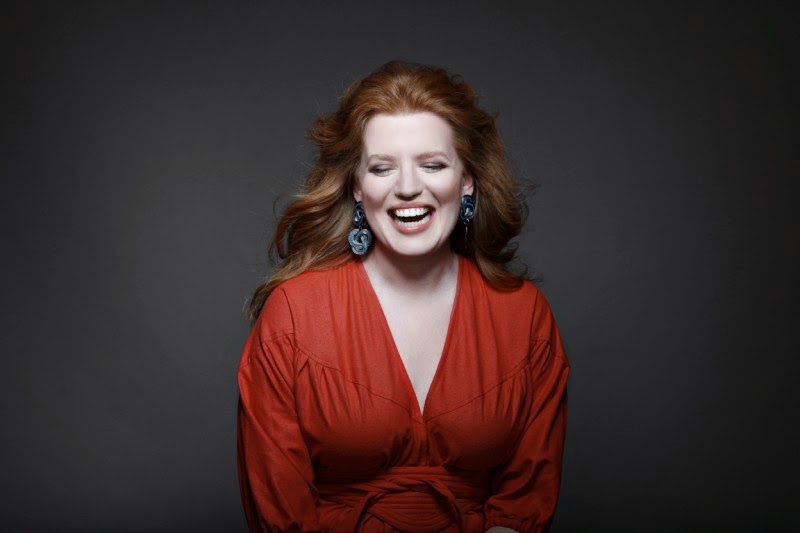
BLO Exposed: An Interview with Jennifer Johnson Cano!

Jennifer Johnson Cano stars as Donna Elvira
in the BLO production.


This week, mezzo-soprano Jennifer Johnson Cano sat down with BLO to talk about her first Donna Elvira, her musical background, and being in Boston in springtime.


BLO: In your own words, what’s the story of Don Giovanni?
JJC: I think it’s really about the relationships in the piece and how everyone relates to Don Giovanni himself. Ultimately, I think it’s the story of this wildly charismatic person who doesn’t use people wisely, and how it affects people’s lives, but at the same time, they’re attracted to him.

BLO: Have you sung the role of Elvira before?
JJC: This is the first time! And it’s such a great first time for so many reasons—it’s a new production and we’re constantly talking as a group about the decisions that we’re making. And Emma [Griffin], the director, has such a fantastic point of view in terms of fleshing out the relationships … So there have been a lot of really great, collaborative conversations … Sometimes I say something and then I’m like, that’s a terrible idea! Let’s do  something else! [Laughs.]

BLO: What is your process like when you’re preparing a new role?
JJC: For me, it’s always about studying the text. What does the text actually say, what is the story that the libretto is actually telling? And then making sure that I can communicate that through what I’m doing onstage … It’s a constantly layering process. You start off super basic, nuts and bolts, and then you decorate the rest of the time... My husband [Christopher Cano, pianist and vocal coach] likens it to building a house: You gotta lay a concrete foundation, you gotta get the studs in, then you put the walls on and the roof on, and that’s the structure. Then the rest is the interior decorator’s job. Do I want to add a window dressing? Would a rug look good in this room? So it starts off basic, and hopefully as close to the truth as you can get, and then you decorate from there.

BLO: What are some of the things that are challenging in singing Elvira?
JJC: The biggest challenge of any opera, not just Elvira, is finding the highs and low to make the character a fleshed-out person. It’s very easy to take the music at face value and create a stock character, but what you really want to do is create someone who has feelings, and reactions, and emotions, and that it’s very, very honest. And [Elvira’s] music changes a lot. When she first enters on the scene, it’s very angular, very up and down, lots of leaps. And then her next aria is this Baroque piece, and if you heard them separately you might not know it was the same character singing that music. Her final aria in the second act, the “Mi tradì,” again is a totally different style. So [the biggest challenge] is bringing all of these things together to create this one, fluid character.

BLO: Do you have a favorite aria or section of music in Don Giovanni?
JJC: The ensembles are the best parts in the show … Mozart’s arias tend to be one or two points of self-reflection, but in the ensembles, the movement of the story is continuous, and I love playing with my colleagues onstage. We play make believe, all day! …[M]y personal favorites are the quartet in Act I, the trio in Act II, and the final scene between Elvira, Leporello, and Giovanni.

BLO: Tell us a little bit about you, your background and training.
JJC: I grew up in Missouri, a small town about an hour south of St. Louis called Festus, MO. My parents are great music lovers, so I grew up going to a lot of musical theater shows and symphonic performances by St. Louis Symphony. My mom was a church musician. So there was always music around to enjoy, but I didn’t really get serious about studying music until I went to college. I went to school in St. Louis and then in Texas, and then I won the Metropolitan Opera National Council Auditions. And from that was invited to be in the Lindemann [Young Artist Development] Program, where I spent three years as a young artist. It was an extremely formative part of my growing up—although I’m still very much growing up!—I had the luxury of being in this incredible opera house, and not only learning actively from people that I would work with one-on-one, but also learning passively though observing incredible people do what they do. And the orchestra making music was the best thing in the world.

BLO: What do you have coming up after Don Giovanni?
JJC: This summer I am going to Opera Saratoga, and I’m doing my first Dido in Dido and Aeneas by Purcell. They’re working with a dance company so I understand that dance will be interspersed throughout the entire show, which will be a fantastic challenge … And then I’m also tackling my first Carmen in Savannah with the Savannah Voice Festival, delving into that world as well. So my spring and my summer are filled with these incredible characters studies and these remarkable women. Very different, but I’m sure by the end of the summer I will have found all these links between them. So I’m very spoiled.

BLO: How has your time in Boston so far been?
JJC: I’m loving Boston so far! I’ve only ever been here for concerts, which are very intense, quick trips, and this is my first time where I have been able to take an afternoon or a morning and wander and see what’s going on. And it’s the first time that I’ve been here in spring … So it’s really nice to be here and sit in Boston Common, or walk up and down Newbury Street or Commonwealth, and take it all in. The only issue is that I’m in Red Sox territory and I’m from St. Louis…but don’t hold it against me, I just happen to be from Cardinals world. So far, two thumbs up for Boston!

Behind the Scenes at BLO's Don Giovanni Photo Shoot!


As rehearsals began, the stars of Don Giovanni came together for a red-hot photo shootcheck out the talented cast below! They bring to life opera's most dangerous leading man and the three dynamic women who are determined to bring him to justice May 1–10 at the Shubert Theatre. Learn more.

Jennifer Johnson Cano and Duncan Rock star in the BLO production as Donna Elvira and Don Giovanni.

The three unforgettable leading ladies of Don Giovanni: Chelsea Basler (Zerlina), Meredith Hansen (Donna Anna), and Jennifer Johnson Cano (Donna Elvira).
 
Chelsea gets ready for her closeup.

Duncan and Jennifer share an inside joke about redheads.

The divas take a break to smile for the camera.

BLO’s PR rep, John Michael Kennedy, and photographer Eric Antoniou provide some direction to the ladies.

The money shot…

And how we got it. Jennifer Johnson Cano lends a hand!

Who said it's not all fun and games?

All photos Eric Antoniou for Boston Lyric Opera © 2015