Forward

Friday, November 9, 2012

Thursday, November 8, 2012

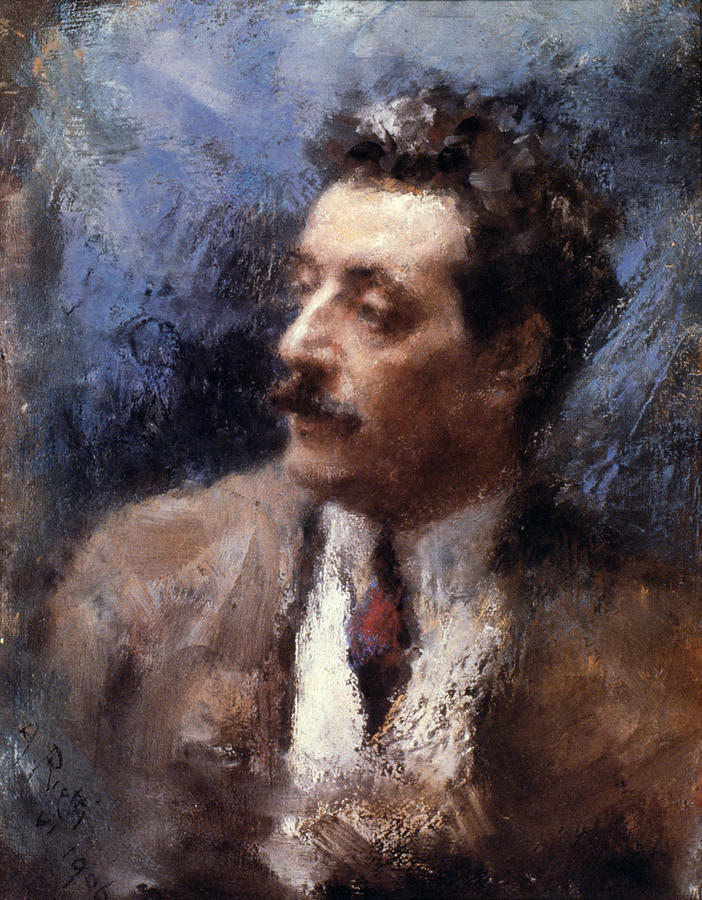
Pucciniana #12

Puccini as only an artist can present him!


Wednesday, November 7, 2012

Dr. von Lyric and his "Curious and Amazing Cabinet of Musical Marvels and Miracles"

"You'll never see a more dramatic performance of the scene between Tosca and Scarpia in Act 2 of Puccini's TOSCA, or a more moving performance of "Vissi d'Arte" than in this excerpt from the 1985 documentary Tosca's Kiss by Daniel Schmidt filmed at the Casa di Riposo - a retirement sanctuary for singers founded by Giuseppi Verdi in 1896. Track down the whole movie (on Amazon or Netflix) - one of the most powerful evocations of the indomitable spirit of the performing artist and unquenchable strength of music itself. A transformative delight!"  - Dr. von Lyric
Sara Scuderi and Salvatore Locapo in Tosca's Kiss


More on Sara Scuderi
 

Pucciniana #11


A very interesting article from The New York Times entitled "Music Box as Muse to Puccini's Butterfly" was published on June 15, 2012. We have reprinted most of it, but encourage you to read the entire article.


"The Murtogh D. Guinness Collection of mechanical musical instruments and automata at the Morris Museum here received national attention after Martin Scorsese’s film “Hugo,” which appeared last November. The museum’s Clown Illusionist, with a disappearing and reappearing head accompanied by a cheery tune, was featured on “CBS Sunday Morning.”

Even now few visitors spend much time in the room where the Swiss music boxes are displayed. Yet, being a musicologist, I lingered there alone last January as my children ran ahead. I kept listening to one box in particular, a harmoniphone from around 1877, equipped with a reed organ and able to play six Chinese tunes from a cylinder.

Confused at first, I suddenly realized that I had stumbled on the key to a musicological mystery many decades old. Scholars have long known that Puccini used Chinese tunes in his opera “Turandot” (set in China and left incomplete on Puccini’s death in 1924). But they have been puzzled by the origins of two “Japanese” tunes in his “Madama Butterfly” (set in Japan and first performed in 1904). What I had found were Chinese sources for two major themes in “Butterfly” and a surprising connection between that opera and “Turandot.”

Was it possible that Puccini had heard this very box in Italy and that it provided crucial inspiration for “Madama Butterfly”?

We know that he heard a “Chinese” music box in 1920 at the Bagni di Lucca home of Baron Edoardo Fassini-Camossi, a veteran of the 1900 Boxer Rebellion in China and of a military operation there at the end of World War I, and an amateur composer with published pieces to his credit. The baron probably acquired this box and other souvenirs in China at the notorious “loot auctions” that followed the suppression of the Boxers.

Puccini’s visit was leaked to the press and later reported in the librettist Giuseppe Adami’s books on the composer, so opera lovers have long known that three tunes from the Fassini music box, now in the private collection of Lionello Ghiotti in Italy, were prominently featured in “Turandot.” The most famous Chinese song, commonly called “Mo Li Hua” (“Jasmine Flower”), signals the seductive and glorious aspects of the fairy-tale Chinese princess Turandot; another tune accompanies the entrance of the three ministers; a third serves as an imperial hymn." read more... 


Monday, November 5, 2012

Pucciniana #10

Two out of our five performances of Madama Butterfly are done and with just three more to go (11/7, 11/9, and a matinee on 11/11) I thought that this Pucciniana should be dedicated to the mystery of the Geisha. - Amanda Villegas, Marketing and Communications Manager


Over the centuries there have been countless books and movies written on the allure of the Geisha. Amazon.com lists 1,188 books alone. But to Western society there is still so much confusion surrounding these Japanese cultural icons. It is a common misconception that the geisha was a prostitute. To the contrary, Wikipedia gives us this definition: Geisha (芸者?), geiko (芸子) or geigi (芸妓) are traditional Japanese female entertainers who act as hostesses and whose skills include performing various Japanese arts such as classical music, dance and games.

Immortalgeisha.com answers the prostitute question:

Are Maiko and Geisha prostitutes?

Most certainly not! A Maiko and Geisha's profession is based on preserving the traditional arts such as dance, singing and music and entertaining in a non-sexual manner.

The confusion as to whether Geisha are prostitutes or not seems to have stemmed both from the close proximity Geisha had to courtesans in the Edo era and the fact that they did technically originate from the red light districts. The main culprit though appears to be from post World War II occupation by U.S. service men.

Many U.S. service came home from Japan with wild and raunchy stories of "Gee-sha Girls" whom, for most of the part where not in fact real Geisha, but rather, ordinary Japanese women or prostitutes masquerading or calling themselves "Geisha", largely because it was easiest for the service men to understand.

Of course, the large majority of service men did not know the difference, and despite the survival of the Geisha districts after the enforcement of the prostitution laws in 1957 and the subsequent closure of the red light districts, the misconception has haunted the flower and willow world ever since.

More interesting links on the Geisha:

One of my favorite history sites, History Undressed has a great article on the history of the Geisha. Read it here!

Japan-Zone brings us an interesting perspective on the history of the Geisha and some personal anecdote! "I recently had the pleasure of meeting a woman who was once the No.1 geisha in Japan. She's a wonderful lady, funny, warm and kind. She was once a favorite of my wife's grandfather who, with his many business and social connections, helped her find sponsors and make her name..." read more...

Japan Guide has information on how to attend a Geisha dinner when in Japan!

"An enduring symbol of fashion and tradition embodying the grace of the Japanese people. Curiosity and misunderstanding face most gaijin about geisha, women in Japan and paid entertainment" Geisha of Japan has probably everything you've ever wanted to know about the Geisha history, lifestyle, and even hairstyles!


In my research I discovered that there are a TON of sushi restaurants named Geisha! Who knew?

Saturday, November 3, 2012

Pucciniana #9

"Nagasaki - the city of Butterfly and the atomic bomb, Back in Nagasaki - a song written by Harry warren and Mort Dixon in 1928. The levels of implied or overt racism and maniacal cultural confusions in the song and in these performances is complicated (to say the least)" - John Conklin, BLO Artistic Advisor


"Hot ginger and dynamite

There's nothing but that at night

Back in Nagasaki where the fellas chew tabaccy

And the women wicky-wacky-woo" - from Back in Nagasaki


Jeeves and Wooster Nagasaki: (yes that is Dr House in his young and foolish days)


Red and Stuggie Song:

Friday, November 2, 2012

Opening Night!

It is opening night of Madama Butterfly! Our cast, crew, and administrative staff are putting the finishing touches on what looks to be a wonderful evening of Madama Butterfly!


To all of you who are getting ready to attend a performance over the next 10 days, we hope you enjoy! And if you are on the fence and unsure whether or not you want to spend a night at the opera, tickets are selling very quickly, so if you want to see one of Puccini's masterpieces this Fall, you must act soon. Visit blo.org for more information.

Toi, Toi, Toi to all of the talented artists that will bring this work to life for you tonight!

Thursday, November 1, 2012

A View from the Crowd: Life in the BLO Chorus

Dana Schnitzer's third of four installments for "A View from the Crowd"

Backstage at BLO
 "It has been exciting to move into the Schubert Theatre for tech and dress rehearsals. I always forget just how fun it is feeling a production come closer and closer to opening. Of course, we now face the issue of re-spacing ourselves, and getting used to the set and wings, but so far it has been quite stress-free. The only real challenge for the chorus is the scene where we renounce Butterfly and have to BACK off the stage without looking behind us, contending with a step and a specific doorway exit!


Backstage at BLO
Listening to and watching Yunah Lee sing through the role of Butterfly the other night has inspired these thoughts: you simply can't thrive in this career unless your technique is rock solid, enabling you to move and act while simultaneously achieving a consistent, beautiful and most importantly HEALTHY tone throughout the entire opera. Opera-singer-hopefuls are quick to blame others; the business and its politics, the soprano with "more connections", the accompanist in their audition... when in reality, once you have achieved the most perfect technique, the way will be paved for you. Otherwise, you frankly have no business being up there in front of thousands of people singing lead roles. Yunah sings the entire (VERY demanding) role without fatigue or a hint of strain. She is truly an inspiration!

Unfortunately the chorus and orchestra lost a day of rehearsal to Hurricane Sandy, but we are not distressed. We are ready to put our best foot (vocal cord?) forward at the open dress rehearsal on Wednesday 10/31. The orchestra, principals and chorus sound amazing, and the behind-the-scenes folks are absolute pros. I will write my blog of final thoughts once we have closed... in the meantime, please come see the show! It is not to be missed!" - Dana Schnitzer

Tuesday, October 30, 2012

Pucciniana #8

The "Nessun Dorma" Variations

curated by John Conklin - BLO Artistic Advisr

Music from Puccini's TURANDOT


"Nessun dorma" as frat party


"Nessun Dorma" as the ROSENKAVALIER trio in drag


"Nessun Dorma" as the invasion of Poland


"Nessun Dorma " as...I really don't know quite what...listen and wonder...and weep?


(footnote: Perhaps almost forgotten today Deanna Durbin had one of the most remarkable and surprising careers and life journey possible. Check her out here!

 
"Nessun Dorma", "Vincero" indeed!


Sunday, October 28, 2012

BLO LIVE on WERS 88.9 today at 1:30 pm

What are you doing at 1:30pm today?? Well change your plans! Or at least add this into the mix!

Dinyar Vania (Lt. B.F. Pinkerton) and Yunah Lee (Cio-Cio-San) will sing arias from BLO's season opening production of Madama Butterfly, live on-air at WERS 88.9 FM.

If you dont have access to a radio you can listen to the live stream online at wers.org

Tune-in to hear some beloved Puccini arias in honor of National Opera Week (Oct. 26-Nov. 4)


Saturday, October 27, 2012

Pucciniana #7

Over the last couple of weeks we have brought you all manner of Pucciniana but focused mostly on popular hits. I thought today we'd take a minute to look at some of Puccini's lesser known operas and arias.  - Amanda Villegas, Marketing and Communications Manager at BLO


I think it is pretty safe to assume that La Boheme, Madama Butterfly, Tosca and possibly Turandot are the most well known Puccini operas. Have you heard of Il Tabarro? La fanciulla del West? Edgar? La Rondine? Manon Lescaut? All of them other operas by Puccini!

Many young singers are familiar with Il Trittico, the all encompassing title givent to a trio of Puccini operas made up of Gianni Schicchi, Il Tabarro, and Suor Angelica. Often Gianni Schicchi and Suor Angelica are performed in part or in whole in educational settings and small opera companies but rarely in major houses. I'm not sure why that is but so it is! Here is a youTube clip talking a bit about Gianni Schicchi.


The most beloved aria from Schicchi is of course "O mio babbino caro" ...

Operavore, an opera blogger for WQXR in NYC pulled together a great list of the Top 10 most underrated Puccini Arias. One of which is "Non piangere Liu" from Turandot sung here by the inimitable Franco Corelli (he is pretty easy on the eyes as well as the ears!)


Which lesser known Puccini operas and arias do you love? Which do you want to know more about? Answer in the comments below and you could win a Madama Butterfly T-Shirt!

BLO Music Director David Angus Conducts at Wexford Festival Opera

Listen live today at 1:30pm to David Angus conducting Wexford Festival Opera's production of Francesco Cilea's L'Arlesiana.

The live stream can be found here: http://www.rte.ie/lyricfm/

Also here is a quick look behind the scenes at Wexford!


Also: A sneak peek at David Angus conducting... ;)

Friday, October 26, 2012

Pucciniana #6

Some alternative ways to view Madama Butterfly from BLO Artistic Advisor - John Conklin

Butterfly skates:

Butterfly dances:


Butterfly pitches:


Butterfly remixes:


Butterfly plays the Theremin:


Butterfly toots her own horn:


Thursday, October 25, 2012

Pucciniana #5

"Groans, roars, moos, laughs, bellows, sneers...." - a review of the premiere of MADAMA BUTTERFLY

"A virtual lynching" - Giacomo Puccini

"No one could have anticipated it. The house (La Scala, Milan) was sold out, the dress rehearsal had gone very well: Puccini was confident enough to invite twelve friends and some relatives which he rarely did for an opening night preformance. He sent a note to Rosina Storchio congratulating her on her interpretation and anticipating a triumph. But it was not to be. February 7,1904 became one of the most notorious of operatic fiascos. Any resemblances to LA BOHEME - particularly Butterfly's entrance music - was catcalled - "We've heard it before" someone shouted. When the composer entered, still limping from his (almost fatal) car accident, he was greeted with derisive laughter. Whistles and shouts of protest overwhelmed the scattered applause often not allowing the singers to hear the orchestra. "Butterfly is pregnant " one man shouted when a breeze swelled Storchio's kimono. "By Toscanini" answered another. The audience howled. Puccini's use of actual birdsong in the "vigil" music was answered by rooster crows. When the curtain finally fell there was total silence shattered only by Pietro Mascagni, Puccini's old and bitter rival, weeping loudly and haranguing the audience for its disgraceful behavior. Puccini's publisher Tito Ricordi (and the composer) always held that these demonstrations were the work of an organized claque of rivals (including Mascagni) who had waited years to bring him down. William Berger has an another interesting take:


Teatro alla Scala, Milan

"Puccini's 'little operas' about ordinary people were not satisfying the national craving for something epic that would command the respect of the rest of the world. Another opera about a sad heroine. ...as if the world didn't already see them as a nation of emotional teary lightweights with soft gooey centers..."

Puccini had his revenge (although he made some small but important revisions after Milan) and the piece received a triumphant reception only a few months later in the smaller theater at Brescia- perhaps tauntingly close to Milan. BUTTERFLY went through several versions but quickly it became one the most performed and beloved operas in the repertory.

Wednesday, October 24, 2012

Dr. von Lyric's "Curious and Amazing Cabinet of Musical Marvels and Miracles"

My friends at BLO are currently engaged in mounting a production of Madama Butterfly - that quintessential portrayal of Japanese culture by a Western artist - with all that that suggests in terms of condescension, buried racism, and sentimental glorification coupled with transcendent sympathy and deeply felt basic human understanding. Japonisme... Orientalism... cultural imperialism... subjects of uncommon complexity, sensitivity and ambiguity. And in that context, what are we to make of that other most famous European depiction of the superficial surfaces of Japanese life, The Mikado by Gilbert and Sullivan? Some entries to ponder... - Dr. von Lyric

Groucho Marx on more familiar ground


 a rare view of the D'Oyly Carte Savoyards in action (in 1926)
  

 I couldn't resist giving you this video of Sir Thomas Allen (who as you know will be joining BLO this season to direct Cosi Fan Tutte, and sing the role of Don Alfonso) and his "little list" - even though (as sung at the London Proms) it's pretty full of very English references (and still pretty funny)


 2 versions of "Three Little Maids"

from the 1999 Mike Leigh movie about Gilbert and Sullivan and the creation of THE MIKADO (if you haven't seen it...do!)


and from the recent London revival of the 1939 Broadway show THE HOT MIKADO


Tuesday, October 23, 2012

A View from the Crowd: Life in the BLO Chorus

A View from the Crowd: Life in the BLO Chorus is a series we will bring to you each production. This is a firsthand glimpse of what it is like as a member of the BLO Chorus.  


Ms. Schnitzer's feet in Geisha socks!
"Staging is well underway, and director Lillian Groag is a brilliant, inventive and extremely detail-oriented director.

Dana Schnitzer
For those of us who are playing geishas, the last couple of rehearsals have felt a bit like how rubbing your belly, patting your head and hopping on one foot simultaneously must feel. There are so many elements to remember, as we are now combining together the music (memorized), staging, and incredibly specific geisha mannerisms all at once. Lilllian told us, "we are not pretending to be Japanese...we are simply presenting a story about Japan to our audience". Indeed we are, and what a foreboding challenge it is! Clad in flowy rehearsal robes, knee pads and tabby socks, we have practiced kneeling, standing gracefully from a kneel (which, by the way, is really hard), bowing, opening parasols, closing parasols, twirling parasols, tilting the head just so, how to walk, how to accept a cup of sake......the list goes on. But when we get it all right (or close to right), and Lillian tells us we are 'like perfect flowers', all the hard work is worth it. The principal artists sound phenomenal, and all of the pieces of this operatic puzzle are starting to fit together. I am excited to finish staging and start running the show!"


Pucciniana #4


Puccini


The Un bel di Variations

by John Conklin, BLO Artistic Advisor

Sometimes it is interesting to see MADAMA BUTTERFLY sung "naked" - without the white makeup, the piled up geisha hair, the enveloping kimono. Here are such performances by Renata Tebaldi, Leontyne Price, Eleanor Steber and Teresa Stratas.
 Renata Tebaldi

Leontyne Price

 Eleanor Steber

Teresa Stratas

Remember - Butterfly's "real" age in the opera is but one year older than this teenager


In this excerpt from Franco Zeffirelli's 2002 film Callas Forever, the captivating French actress Fanny Ardant plays ( a mostly fictionalized ) Maria Callas in the last year of her life. Alone (except for eavesdropping figure of her manager - Jeremy Irons) she listens - and sings along - to her own recording of Butterfly

Another place where we can see singers deeply involved in a role but out of a theatrical context (and away from the gaze of an audience) - "on their own" as it were - is in, often very revelatory, rehearsal footage. In this instance it is, of course, the BUTTERFLY Act 1 love duet, Vogliatemi bene,  rather than our Un bel di.

With Jonas Kaufmann and Angela Gheorghiu

Monday, October 22, 2012

BUTTERFLY GOES to the MOVIES # 3


MADAME BUTTERFLY (1932)

Based on the Belasco play with music incorporating bits of Puccini. Sylvia Sydney is quite affective as a delicate and wistful Butterfly going against her image as a film noir tough girl heroine. She worked with such Hollywood stars as Spencer Tracy and Henry Fonda and in such classic 30's pictures as Fritz Lang's FURY and Hitchcock's SABOTAGE (both 1931) but she is perhaps best remembered by contemporary audiences as the gravel voiced Juno in Tim Burton's BEETLEJUICE (she's the one who exhales her cigarette smoke out throught her knife slashed throat - If you haven't seen the movie, don't ask...just go see it) - John Conklin - BLO Artistic Advisor

Mary Pickford in a silent version (1915)


Implied racism or just good clean fun?

2 clips from a very curious 1962 film directed by Jack Cardiff and starring Yves Montand and Edward G. Robinson... and Shirley MacLaine. A complicated plot which somehow ends up with MacLaine in full geisha drag fooling everybody and appearing in a movie version of Puccini's MADAMA BUTTERFLY where she sings Un Bel Di (don't ask) Silly,even vaguely grotesque ... but not unwatchable!


We've seen Sylvia Sydney, Mary Pickford, Marlon Brando, and Ricardo Montalban putting on Japanese makeup and here's another slue of Hollywood actors in "yellowface"