Forward

Showing posts with label la boheme. Show all posts

Monday, July 11, 2016

Celebrating a Year of Opera

Our Favorite Moments of the 2015/16 Season

By Lucy Caplan, Education & Community Engagement Intern

October
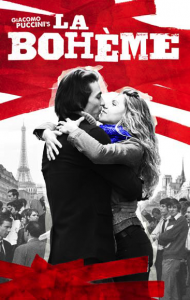
: We kicked off the Season with our annual Opera Gala.  The evening began with the spectacular Opening Night performance of La Bohème at the Shubert Theatre, with pre-show and post-show parties at the Wang filled with dancing, delicious desserts, and champagne.
Photo: Pierce Harman for Boston Lyric Opera

October: We welcomed the talented singers of the children’s chorus Voices Boston for our production of La Bohème. 12 young artists, led by director Kirsten Shetler, joined us for the production.
Photo: T. Charles Erickson for Boston Lyric Opera

 October: We had the privilege of hearing directly from composer Philip Glass at the MFA’s Shapiro Celebrity Lecture Series. BLO cast members kicked off the event with performances of scenes from In the Penal Colony, and a conversation between Mr. Glass and WGBH’s Jared Bowen was filled with fascinating insights about the composer’s illustrious career.

Photo: Eric Antoniou for Boston Lyric Opera

November: We launched our  Opera Annex production of In The Penal Colony at the Boston Center for the Arts. At the post-show talkback, the audience heard insights from our artistic production team about how we mounted an opera in the Cyclorama.
Photo: T. Charles Erickson for Boston Lyric Opera

December: Sparkling melodies rang out through the galleries of the MFA at Brindisi! Italian and French Drinking Songs. After a performance by BLO artists, attendees enjoyed food and drink inspired by the music, a lively discussion, and – last but not least – a singalong!
Photo: Boston Lyric Opera

January: Students in Boston and beyond had the chance to learn about opera when BLO’s Emerging Artists visited their schools. More than 700 students at 11 different schools had  the opportunity to enjoy live performances by professionally trained singers .
Photo: Boston Lyric Opera

February: The highlight of Opera Night at the Boston Public Library was a delightful surprise: the great-niece of Sibyl Sanderson (Massenet’s favorite soprano), who lives in Boston, brought along a copy of The Sorrows of Young Werther inscribed by Massenet himself! Hosted by BLO Music Director and Conductor David Angus, the event also explored Werther through a mixture of commentary and live performances by members of the cast.
Photo: Eric Antoniou for Boston Lyric Opera

March: We invited you to “Add Your Love” to BLO’s production of Werther by submitting a love letter. 
Photo: T. Charles Erickson for Boston Lyric Opera

April: We were honored to host Alexander Lehar, grand-nephew of composer Franz Lehár, who attended opening night of The Merry Widow. Mr. Lehar is pictured here with conductor Alexander Joel (the half-brother of Billy Joel!) and BLO General & Artistic Director Esther Nelson.
Photo: Pierce Harman

May: BLO former and current Emerging Artists serenaded shoppers and diners with opera classics all about food and drink at an Opera Pop-Up concert at the Boston Public Market, part of ArtWeek Boston. Watch a video of their performance here!
Photo: Boston Lyric Opera

June: Students presented world premieres of their classroom operas at schools all over greater Boston. Over 350 students participated in the Create Your Own Opera Partnership program this year, working intensively with BLO Resident Teaching Artists and classroom teachers to write and perform their own original operas.
Photo: Boston Lyric Opera


Thank you for sharing our 2015/16 Season with us, and we hope you'll join us for our 2016/17 40th Season! Purchase online or call our Audience Services team at 617.542.6772.


Wednesday, October 14, 2015

Looking Back on La Bohème: Feedback and Reviews

La Bohème has left the stage, but the music lives on! Enjoy this sampling of reactions from students, audience members, and critics.


“One has to applaud Boston Lyric Opera for the boldness of its new production.”
– The Boston Globe

“I thought the production was fabulous in every way. I hope we get the reviews it deserves for being so creative and lush and poignant. Congratulations to the entire artistic team!”
– Tania Zouikin, audience member


“La Bohème was the first opera I have been to, but it surely wont be the last. The captivating performance had me glued in from the first note to the very end…What a marathon—and they all seemed to handle it with ease!”
– Owen Mansfield, Harvard student


“A risky and rewarding update…[with] intellectual punch and polish.  This ‘Bohème’ finds itself in a new era, looking sharp and sounding terrific.”
– WBUR


“I absolutely adored the Opera last night. To be honest, I wasn’t sure if I was going to like it at first, and signed up just to try it out. But when I saw it, it took me into a whole other world.”
– Student, Tabor Academy


“An exceptionally talented cast gave rich performances across the board.”
– Boston Musical Intelligencer


“I was very impressed. The concept was intelligent and it was realized excellently musically, dramatically, and vocally.”
–Audience member


“From the beautiful and ornate theater to the minimalist set, everything was visually wondrous. Then the music began and within ten minutes I was lost in the story.”
– Student, Tabor Academy


All photos: T. Charles Erickson for Boston Lyric Opera

Tuesday, October 13, 2015

DR. VON LYRIC: May I Have This Dance?

Dear opera goers, opera fans, and fellow "flaneurs" on the streets and byways of the Internet,

I'm glad to be returning to "In the Wings." Over the next months we will be following the current BLO Season's intriguing round-trip from Paris to Devil's Island and back again (what a journey!) and checking in on YouTube for some perhaps surprising videos.

Musetta's delirious waltz-song from Act II of Puccini's La Bohème is certainly one of his most famous and enticing melodies. As I look back on the BLO production, which closed on Sunday, Emily Birsan's elegantly sexy delivery stands out—especially as the Marx Brothers (Karl and Groucho) gazed down (lasciviously?...censoriously?) from the walls of Café Momus on the BLO set. Here are a few variations on a theme.

The film Moonstruck is one of the most charming movies to employ opera as a central emotional thread.


Puccini has not escaped the reach of pop music (and maybe he's enjoying every minute of it).


A curiosity is up next. In a 1950 movie, Jane Powell sings the waltz (atrociously...she was only 21, but really that's not much of an excuse...and in what language is she torturing us?). She's introduced by Carmen Miranda (why didn't SHE sing this?).


Another variation: trumpet. Why not?


And now for some serious singing: Leontyne Price in 1971. Elegant, beautiful to be sure, but perhaps a bit overly-refined?


In contrast, Maria Callas in concert in 1958. Edgier and sharper.


And lastly one of my favorite singers, the utterly unique and idiosyncratic Concita Supervia...from a 1934 movie, Evensong.


Happy Waltzing.

Monday, October 5, 2015

The Puccini Puzzle

By Harlow Robinson

Portrait of Giacomo Puccini circa 1900
photographer Mario Nunes Vais (1856–1932)
Today, an operatic world without Puccini’s La Bohème seems as unthinkable as a Christmas without The Nutcracker. The most often performed of the composer’s operas, and among the most popular works in the repertoire, it has attracted some of the greatest singers of all time (Maria Callas and Renata Tebaldi, to name only two) to the juicy leading role of the impoverished, tubercular seamstress Mimì. La Bohème was one of the first operas to be recorded and has been staged in every way imaginable in all the world’s major houses. Hollywood has often plundered its music, most notably in a key romantic scene between Cher and Nicolas Cage in the 1987 romantic comedy Moonstruck. This touching tale of struggling Parisian artists even inspired a smash hit Broadway musical, Rent.

But the reviews of the premiere in Turin on February 1, 1896, did not seem to predict such enduring success. Local critic Carlo Bersezio predicted that La Bohème would not survive, a view shared by many other industry insiders. Audiences, however, loved the show, so much so that the initial production ran for 24 sold-out performances. This sharp divide between the negative critical and academic reception and the positive popular one has followed La Bohème (and most of Puccini’s other operas, for that matter) ever since. Composers, critics, and musicologists have repeatedly accused Puccini of pandering to lowbrow, middle-class taste and of shameless manipulation of his audience. “To some younger Italian contemporaries, the name Puccini seems to have assumed honorary status as a four-letter word,” Arthur Groos and Roger Parker write in their guide to La Bohème.

The anti-Puccini forces received powerful ammunition from the grumpy musicologist Joseph Kerman in his influential 1956 book Opera As Drama. Here, he dismisses Puccini’s operas as “second-rate stuff ” and famously condemns Tosca (completed four years after La Bohème) as “that shabby little shocker.” Take that, Giacomo.

So what explains this drastic divergence of views? In her book The Puccini Problem: Opera, Nationalism and Modernity, Alexandra Wilson observes that the explanation lies primarily in the political/cultural environment in Italy and Europe around the time of the opera’s premiere. Puccini (1858-1924) wrote his major operas during a period of considerable turmoil and social change. Italy had only recently (in 1870) been unified into a single nation, and Italian intellectuals and artists were struggling to define what Italian culture should be. For many of them, Puccini’s operas—especially La Bohème, with its French source and Parisian setting—weren’t “Italian” enough, and his musical style was dismissed as too “international” and “decadent.”

Even worse, his characters had a heroism deficit. It was generally acknowledged that Puccini’s female characters—especially Mimì and Tosca—upstaged his men, providing fuel for the oft-repeated claim that he was too “feminine” at a time when Italian culture was striving to become more masculine and nationalistic. To some, the characters of La Bohème were trivial and weak—pathetic losers. One critic even called them “invertebrates,” and others insinuated that Puccini was homosexual (he was not). Wilson links such objections to a rise in anti-feminist, misogynist attitudes in Italy at the time, which would eventually lead to the fascist nationalism of Mussolini.

Critics also relentlessly compared Puccini to the two operatic giants of the age—his Italian countryman Giuseppe Verdi on the one hand (who died in 1901) and the German Richard  Wagner on the other. His operas didn’t have Verdi’s patriotism and strength, or Wagner’s musical complexity and depth, they complained. At a time when the Modernist movement was sweeping across Europe and Wagner’s operas were becoming better known in Italy, Puccini’s style seemed conservative and passé. Filippo Marinetti, strident leader of the Italian Futurist movement, attacked his operas as the equivalent of musical “junk food.”

But none of this intellectual verbiage stopped audiences from loving La Bohème. In fact, it likely encouraged them. The opera’s seductive blend of humanity and nostalgia, its poignant portrayal of tender first love, its very real and humble characters (so different from the remote kings, queens and gods populating many operas), and its glorious flood of symphonic and vocal lyricism—these features never fail to move and enlighten audiences. Today, as in the past, Puccini’s “passionate feeling for life” (as novelist Heinrich Mann put it) continues to seduce and fascinate.

Harlow Robinson is an author, lecturer, and the Matthews Distinguished University Professor of History at Northeastern University. His articles and reviews have appeared in The Boston Globe, The New York Times, Opera News, Symphony, and other publications.

This article has been reprinted from the fall issue of Coda, the magazine of Boston Lyric Opera. To read the magazine in full, please visit www.blo.org/coda.

Thursday, October 1, 2015

Words, Words, Words: Paris 1968

By John Conklin

In the two blazing months of the "Paris Spring of '68," the City of Lights became the City of Slogans. A universe of graffiti (sprayed, scrawled, and painted) of posters, placards, and manifestos, of pamphlets and radical newspapers...texts everywhere amidst the strikes, the demonstrations, the idealism, the  passion, and the violence. Words appeared on crumbling medieval walls, on grandiosely pompous government buildings, on trees, on automobiles, on the pavement. And because this, for the most part, was a university student-run manifestation, there was humor, whimsy, even wit (albeit sometimes, not surprisingly, of a somewhat undergraduate mentality) amidst the high rhetoric of anarchy, passionate idealism, a radical call for political power...for revolution itself. You will see onstage in the BLO production of Bohème a number of these texts, the strikingly concentrated essence of the whole May event expressed in a few words.

Here are a few more that try to give the unique flavor of this event, so full of contemporary relevance (think Bernie), historical fascination, and psychological resonance.

L'IMAGINATION PREND LE POUVOIR (Imagination has seized power)
LE BONHEUR EST UN IDEE NEUVE (Happiness is a new idea)
REVE + EVOLUTION = REVOULUTION (Dream plus evolution equals revolution)
NOUS SOMMES REASSURE. 2 + 2  NE FONT PLUS 4 (We are reassured. 2 + 2 no longer make 4)
L'ANARCHIE , C'EST JE (Anarchy is I)
LA POESIE EST DANS LA RUE (Poetry is in the streets)
LA DURE REALITE DU PAVE (The harsh reality of the paving stone)
SOYONS REALISTES, DEMANDONS L'IMPOSSIBLE (Be realistic, demand the impossible)
EAGERER, VOILA L'ARME (Exaggeration, that is the weapon)
AYEZ DES IDEES (Have ideas)

Wednesday, September 30, 2015

La Bohème Fun Facts

Giacomo Puccini was the descendent of a long line of musicians and composers who served his native Lucca, a small city in Tuscany. His great-great grandfather, also named Giacomo, became the organist of the city cathedral in 1793, composing liturgical music as well as dramatic music for public celebrations. Giacomo passed his position down to his son Antonio Benedetto, who inspired musical interest in his son Domenico (Puccini’s grandfather). Domenico studied music in Bologna and Naples, earning serious recognition for his abilities as a composer, before returning to Lucca to take up the position that his grandfather and father had held before him. His son Michele received a more rigorous academic education in music than any of his ancestors had received, then returned to Lucca as Inspector of the Royal Music Institute.

Michele and his wife Albina had seven daughters and one son: Giacomo. There was, of course, a public expectation in Lucca that little Giacomo would grow up to take on his father’s responsibilities and continue the family line. With the support of patrons, he made his way to the Conservatory in Milan, but although he returned to Lucca for a time and composed his early operas there, he never took on the inherited position.

However, although he left the family tradition behind, Puccini carried his musical lineage with him throughout his life. His full name is a collection of the names of his ancestors: Giacomo Antonio Domenico Michele Secondo Maria Puccini.


In the early 1830s, Henri Murger created a series of magazine sketches about the bohemian lifestyle, which he eventually adapted into a novel, Scenes de la Vie de Bohème (1848). Puccini used Murger’s stories as the inspiration for his La Bohème. Murger, in fact, lived the bohemian life in his youth and many of the historical details in his work were based on his experiences. Murger was part of a group of young bohemians who lived in extreme poverty and were called “Water-Drinkers,” because they could not afford anything stronger. Murger lived in a small attic apartment in his early years as an artist and believed in the theory, “Art before life.”


The company Casa Ricordi was Italy’s predominate publisher of musical scores in the 19th century (and still exists today!). Guilio Ricordi was a major force in shaping Italian musical culture, particularly the public’s taste in opera. Puccini was one of his favorite promising young composers. When Edgar, one of the composer’s early operas, bombed at the box office, Ricordi encouraged him to revise and then to re-revise the opera, until Puccini eventually gave up. Ricordi then supported Puccini through the three and a half years it took him to compose La Bohème.

Perhaps the most important way that Ricordi supported Puccini’s career was how he marketed Puccini’s scores to opera houses. Ricordi created a system in which opera house managers who wanted to purchase the rights to one of Verdi’s incredibly popular operas also had to purchase the rights to an opera by one of Ricordi's less-famous personal favorites -- Puccini chief among them. This two-for-one deal ensured that Puccini’s operas were exposed to a wide audience very quickly.


In response to the clear divide between the early, negative critical response to La Bohème and the rapturous enthusiasm of the opera’s first audiences, one insightful critic settled the case this way: “Between the two litigants, I say that the public is right.” Unfortunately, his proposed settlement went unheeded, and the divide between critical/academic opinion and public reception continues to this day. Some of the great composers of the 20th century have joined ranks with the critics, particularly Strauss, Stravinsky, and Webern. Debussy was specifically critical of Puccini’s decision to take on the French subject matter of La Bohème because, in his opinion, an Italian could never understand the true nature of French history and art. And yet despite a century of dismissals by critics and artists, La Bohème remains beloved and has become one of the three or four most-performed operas in the global repertory.


Bohemian culture was said to be “a man’s world.” In its art and literature, women often do not exist, or are suspiciously absent beyond their relations to men. The role of the woman in this culture was to provide men with pleasure and creative inspiration. Women were often categorized as either grisettes, working-class women and housekeepers – or lorettes, beautiful in appearance, but incapable of working “real” jobs. Instead, lorettes acted as, for example, models – one of the lowest occupations in the 18th and 19th centuries for women. Characters such as Fantine in Les Misérables and Mimì in La Bohème are considered grisettes.


Puccini’s La Bohème premiered in 1896, and is one of his best-loved operas (along with Tosca and Madama Butterfly). A hundred years later, the carefree spirit of bohemian culture was brought back to the stage with Jonathan Larson’s adaption of La Bohème in his 1996 Broadway production, Rent. Rent, a modern-day rock musical, is closely based on La Bohème. The works share similarities in music, plot, lyrics, and even some of the specific naming of characters. For example, La Bohème centers around a love story between Rodolfo and Mimì; similarly, Rent focuses on the love story of Roger and Mimi. Rent had its official Off-Broadway opening on January 25, 1996, one week shy of the hundredth anniversary of the first performance of La Bohème. (That’s 52,549,920 minutes!)


These fun facts were collected in collaborations with students at Emerson College, Shani Brown, Emily Duggan, and Joshua Platt.


References:

Bohemian Paris: Culture, Politics, and the Boundaries of Bourgeois Life, 1850-1930, by Jerrold Seigel. Penguin Books, 1987.

Book of Musical Anecdotes, The, by Norman Lebrecht. The Free Press. NY, NY, 1985.

First Bohemian, The: The Life of Henry Murger, by Robert Baldick. Hamish Hamilton, 1961.

Giacomo Puccini: La Bohéme, by Arthur Groos & Roger Parker. Cambridge Opera Handbooks. Press Syndicate of the University of Cambridge, 1986.

New Grove Dictionary of Music and Musicians, The, ed. by Stanley Sadie & John Tyrrell. 2nd edition. Oxford University Press, 2004. Entry: ”Puccini, Giacomo,” by Michele Girardi.

Operas of Puccini, The, by William Ashbrook. Cornell University Press, 1968.

Paris: The Secret History, by Andrew Hussey. Bloomsbury, 2006.

Physiologie de la Lorette, by Maurice Alhoy. Ligarian, 2014.

Puccini Companion, The, ed. by Simonetta Puccini & Simon Weaver. W.W. Norton & Co., 1994. Entry: “The Puccini Family,” by S. Puccini.

Puccini: His Life and Works, by Julian Budden Puccini. Oxford University Press, 2002.

Renting a Queer Space: The Commodification of Queerness in Jonathan Larson's "Rent," by Helen Deborah Lewis. ProQuest Information and Learning Company, 2007.

Skeletons from the Opera Closet, by David L. Groover & C.C. Connor. Moyer Bell, 1986.

Monday, September 28, 2015

La Bohème: BLO's Version

By Magda Romanska

Rodolfo; Sketch by Nancy Leary, Costume Designer
Boston Lyric Opera’s version of La Bohème relocates the famous opera from mid-19th-century Paris to the Paris of May 1968. The geographical location remains the same: the Latin Quarter neighborhood, which preserves much of the original bohemian spirit with students, artists, and vagabonds of all sorts hanging out at cafés, making art, and debating matters of life and existence into the wee hours of the night. The zeitgeist of both époques is also comparable.

The plot of La Bohème takes place in December 1830, just a few months after the French Revolution of 1830 (also known as the July Revolution), and two years before the June Rebellion of 1832. The Second French Revolution of 1830 (Trois Glorieuses – Three Glorious Days), saw the overthrow of the King Charles X and led to the establishment of constitutional monarchy. Immortalized in Victor Hugo’s novel, Les Misérables, the June Rebellion (or Paris Uprising of 1832), was a follow-up to the 1830 events. The young artists, students, and expats actively participated in both uprisings. (The story goes that 1832 violence was triggered by a young painter, Michel Geoffroy, who started the uprising by waving the red flag.) The two rebellions were sparked by poor living conditions and general malaise that afflicted France  between 1827 and 1832. Overcrowding and food shortages made the atmosphere in Paris particularly volatile.

The spirit of May 1968 events very much parallels that of the 1830s revolutions. 1968 was a turbulent moment in French history; student protests against the bourgeois and technocratic values of the newly emerging capitalist society channeled the youthful idealism of these new bohemians. As in the original La Bohème, May 1968 in Paris was rife with tension between the romantic ideals of the artists and indifference of the world in which they were forced to function. Like the 1830s revolutions, May 1968 was a rebellion against what the students perceived to be unjust social order.

In staging our production, we drew inspiration from the mid-20th-century German theatre director Bertolt Brecht, whose dramatic theory of distanciation, including the use of placards, signs, and asides, aims to reveal new and unexpected meaning within preexisting text. By distancing La Bohème from its traditional, classic depiction and focusing on the everyday life of French students, we showcase the universal appeal of Puccini’s love story and the transcendental, potent force of youth, driven by passion, desire, and idealism. Revolting against the old culture, old values, and old traditions, the French students of the May 1968 revolution tried to change the world. They wanted to burn down the institutions of the old world order, and perhaps nothing symbolized that order better than the Paris Opera House. Thus, in our production, the Paris Opera House represents both the old order and, ironically, the new foundation of the students’ rebellion.

Musetta; Sketch by Nancy Leary, Costume Designer
Aesthetically, our production calls upon French New Wave cinema, particularly the movies of Jean-Luc Godard, whose loose, non-linear, and ironic storytelling style, which blends multiple narratives and viewpoints, acutely reveals the ideological contradictions of the French protests. The post-war period in France was characterized by rapid economic developments and, in many ways, the students who protested the newly emerging technocratic and capitalist social model were also very much part of it. As the children of the well-off French middle class, they grew up in relative affluence before rebelling against the boring, bourgeois lifestyle of their parents. After the revolution, they all went back to school and to their predetermined, middle-class futures. This revolution was but a brief flirtation with the freedom of an alternative, poverty-stricken, and romanticized artistic life, which many of them knew they would never be forced to live. In this world, Mimì is an outsider. She is not a college student. She works for a living, and she has no middle class life to fall back on after the revolution. She is drawn to Rodolfo because, among other things, he rejects the privilege of his birth, and he is drawn to her because she represents the authenticity of the class struggle, which he is lacking. In one of Godard’s most renowned movies, Masculin Féminin, the film’s most famous chapter is entitled, “The Children of Marx and Coca-Cola.” This oxymoronic statement encompasses precisely the contradiction of the French revolution of 1968: the children of this revolution wanted simultaneously to overturn the capitalist society and live in its comforts.

The barricade; Set design sketch by John Conklin, Set Designer
Our production also references Italian director Bernardo Bertolucci’s 2003 movie, The Dreamers, which chronicles the sexual entanglement of Matthew, an American college student visiting Paris during the 1968 revolts. He moves in with a pair of twins, brother and sister, and for a brief period the threesome live an idyllic and sexually liberated life, only to eventually part ways, leaving Matthew disillusioned and disturbed. In our version of La Bohème, we replace the bohemians’ garret with an abandoned apartment, ready for demolition. The toll gate at the Barrière d'Enfer becomes the makeshift revolutionary barricade that the students have assembled from everyday objects. Painted in steely gray, this barricade is somewhat surreal: both a dreamscape and perhaps a nightmare. Amidst this backdrop of witty, inspiring, and often self-contradictory political slogans, Mimì and Rodolfo’s love story unravels to the heartbeat of the revolution. Mimì becomes a symbol of both the passion and the frailty of the brief, violent insurgence that was perhaps doomed from the very start.


Magda Romanska, Ph.D., BLO Dramaturg, is an award-winning theatre scholar and writer. She is Associate Professor of Theatre and Dramaturgy at Emerson College, and Research Associate at Harvard University’s Minda de Gunzburg Center for European Studies, and Davis Center for Eastern European Studies.

Thursday, September 24, 2015

David Angus on the Music of La Bohème

Ever wondered what makes Bohème so special? Here's David Angus, BLO Music Director and Conductor of La Bohème, on its music:

PASSION!

For me, the word that sums up Puccini’s music is passion. The surges of emotion that ebb and flow through his romantic music appeal directly to the listeners’ hearts, whether or not they know anything about music. He knows exactly how to allow a singer to soar over the orchestra in wonderful lyrical lines, and he plays with our emotions with his gorgeous twists of harmony.

Puccini was a total master of theatrical effect; he would always use contrasting context to heighten emotional impact, as in the last act of Bohème where the horseplay of the boys is shatteringly interrupted by the arrival of the dying Mimì. He is often accused of manipulating the emotions of the audience, but surely that is a fundamental building block of theatrical writing?

Puccini’s characters and emotions are so real, unlike the heroes, gods and political giants of earlier operas, right up to (and including) Wagner. Suddenly we can all identify with the real pain and happiness that the people on stage are experiencing, and, without any intellectual pretensions, we laugh and cry with them.

What so many critics fail to observe is what an extremely masterful composer Puccini was—exquisite touches of orchestration, tremendous driving energy, subtle harmonizations that tug at the heart strings. He was an ultimate professional whose every note counted, whose every twist of harmony was significant and effective, and who always gave his singers the possibility of singing to the very best of their potential.

Puccini understood staging and timing as no other composer had since Mozart. All the action is built directly into the music, and he never indulges in long musical sections which interrupt the action. His operas are very concise; Bohème, with its four acts, contains under 1 hour and 45 minutes of music altogether.

Tuesday, September 22, 2015

Get to Know La Bohème

Background information by John Conklin, Artistic Advisor

WHO, WHAT, WHERE, WHEN 

PREMIERE 
La Bohème premiered in 1896, in Turin at the Teatro Regio, conducted by the young Arturo Toscanini. In 1946, fifty years after that premiere, Toscanini would conduct a radio performance with the NBC Symphony Orchestra, featuring Jan Peerce, Licia Albanese, and Robert Merrill, which has been issued on CD by RCA Records.


SUBSEQUENT PREMIERES
•    First outside Italy: 1896, at the Teatro Colón, Buenos Aires
•    Alexandria, Lisbon, and Moscow: 1897
•    England: 1897, in Manchester, by the Carl Rosa Opera Company, supervised by Puccini himself and sung in English
•    United States: 1897, in Los Angeles (who would have guessed?!), also by the Carl Rosa Opera Company
•    France: 1898, at the Opéra Comique
•    Austria: 1903, at the Vienna State Opera, conducted by Gustav Mahler (who was not a big fan of Puccini...he favored the Leoncavallo Bohème—see below)
•    The first production at the Salzburg Festival did not occur until 2012 (snobs!)
Everywhere else, the opera was quick to gain international popularity, which it has held ever since.

THE SOURCE
La Bohème’s source material was a novel, published in 1851, titled Scènes de la Vie de Bohème, by Henri Murger (1822–1861). Not a standard novel, it is rather a collection of loosely related stories, all set in the Latin Quarter in the Paris of the 1840s and drawn from Murger’s own experiences as a desperately poor writer. It was made into a play by Murger and Théodore Barrière, and it is from this version that Puccini’s libretto is chiefly derived.


THE OTHER BOHÈME
The composer Leoncavallo
The Italian composer Ruggero Leoncavallo—a quite prolific opera composer now best known for Pagliacci—had begun to work on a setting of the Murger story when he found out that Puccini was circling around the same subject. He alerted the press and, after some questionable maneuvers by Puccini and his publisher, Puccini obtained the rights. Leoncavallo went on to write his version, which premiered in 1897. It is sometimes still produced and is not without merit, but inevitably suffers in comparison with Puccini’s masterpiece. Bad feelings endured...from then on, Puccini referred to Leoncavallo (”lion-horse”) as “Leonasino” (“lion-ass”).

THE MISSING ACT
In 1957, widow of Luigi Illica, one of La Bohème’s librettists, died, and her husband’s papers were given to the Parma Museum. Among them was a full libretto, which revealed that the librettists has prepared an act which Puccini didn’t use. It occurs between the Momus Act and Act 3, and shows the meeting of Mimì and the Viscount, which causes Rodolfo’s jealousy that he refers to in Act 3. Leoncavallo’s opera includes this scene.

ADAPTIONS
•    RENT:  A 1996 musical by Jonathan Larson is based on La Bohème. Here, the lovers, Roger and Mimi, are faced with AIDS and progress through the action with songs inspired by the opera such as “Light My Candle.”

The cast recoding of Luhrmann's La Bohème
•    In 2002, Baz Luhrmann staged a version of La Bohème on Broadway based on his production for Opera Australia. It played eight performances a week, so there was multiple castings of the principals (including Jesus Garcia, who is singing Rodolfo in the BLO production this Season). His film Moulin Rouge (2001) based part of its plot on the original story.

•    There is a silent film from 1926 with Lillian Gish and John Gilbert, as well as other less well known film versions.